Showing posts with label exercise and pd. Show all posts
Friday, September 7, 2012
Guest Blog: Stroke Story Has Implications for Parkinson’s Treatment
Therapy is most effective when it addresses an individual’s passion
By Ken Aidekman
Paul West is a professor of English and comparative literature and a prodigious writer of both fiction and non-fiction books. His entire life revolves around words. But, in 2003 he suffered a massive stroke that left him with global aphasia, a condition that rendered him unable to understand words or produce them. His wife, Diane Ackerson, also an author and poet, tells the story of West’s bumpy road to recovery in her book One Hundred Names for Love.
Upon his emergence from critical care, West was faced with the arduous task of regaining his communication skills. Initially, he made reasonable progress, but after a few months of both physical and speech therapy he reached a plateau. Ackerson saw her husband become increasingly frustrated with his failure to achieve more advanced goals. Although his speech therapist asked questions in simple English, try as he might, West could not find the appropriate words to answer her. When he did finally respond, his language frequently included complex metaphors and abstruse literary references. Such answers were lost on the therapist, but Ackerson realized she could parse out her husband’s meanings, albeit with considerable effort.
At this point Ackerson personally took over West’s rehabilitation and re-directed it toward his strengths. She incorporated his extensive knowledge of literature and obscure vocabulary. If he could not call up the exact answer, he was encouraged to get his meaning across utilizing complex word association and phrases from deep in his literary memory. The couple played word games like Dingbats and Mad Libs. They used “immersion therapy” to swamp West with language. When they were too tired to talk, they sang together and exercised together. And when it was all too much they collapsed and fell asleep. Upon waking they would repeat the process all over again.
It took several years, but West’s rehabilitation was a resounding success. He even wrote and published his own book about his experience titled, A Stroke of Genius. The lesson here is that finding the most effective therapeutic approach involves playing to an individual’s strengths. Success or failure in rehabilitating a person with neurological damage may just hinge on appealing to that individual’s unique “passion.”
West did not have Parkinson’s, but the story of his rehabilitation still has implications for those who do. There are therapies that address nearly every symptom of PD. Speech therapy helps with poor vocalization and impaired swallowing. Dance therapy helps with balance and focused movement. Tai Chi promotes body awareness and balance. Vigorous cycling, whether stationary or while riding a bicycle, helps with range of motion and may actually provide some relief from symptoms in general. Exercise and stretching helps keep muscles and joints flexible and strong.
Parkinson’s therapy is a rapidly developing field. Sometimes it seems there are as many different therapies as there are medications. How do you go about finding out which therapy works best for you? Is there a therapeutic mode that fits in with your individual “passion”? Who do you talk to about putting together your own therapeutic action plan?
Your experience provides an important guide for those who are new to the game and less knowledgeable.
What can you share about PD therapies with others that will help them cope?
Ken Aidekman is an investment advisor in Chatham, NJ. Among his activities in the Parkinson's community, he led the Parkinson’s Action Network’s (PAN) efforts in New Jersey to pass the Morris K. Udall Law for Parkinson’s Research and Education. At PAN’s first advocacy forum in 1994 he met Margot Zobel who was in the process of founding the Parkinson’s Unity Walk. Mr. Aidekman helped put together the Walk and became the organization’s first Chair.
[Note from PDF: We thank our friend Ken Aidekman for this thought-provoking blog. We welcome comments below on his post. For additional information on therapies for Parkinson's disease, visit www.pdf.org or contact the PDF HelpLine at (800) 457-6676 or info@pdf.org]
Tuesday, April 24, 2012
Congratulations to Brooklyn Sports Club: PDF Champions
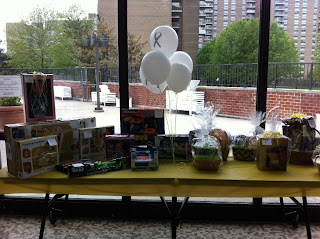
I wanted to follow up on a very special event that was highlighted a few weeks ago on the PDF Champions blog. Aqua-Thon: Splash for a Cause hosted by Brooklyn Sports Club under the direction of Aquatics Director, Michael Hornung.
The Aqua-Thon was held this past Saturday, April 21 and was a great success! The Aqua-Thon included a gentle swim, aqua aerobics, aqua Zumba, children's swim, raffles, games, informational materials about Parkinson's disease, food and music! Donation cards were also sold and displayed for all to see.
The event raised over $3,100 for Parkinson's research!
Eddie Pelto, PDF's Director of Development, had the pleasure of attending the event and took some fantastic photos. Please check them out.
Remember: The Cure Begins With YOU!
Monday, March 26, 2012
Run for PDF!
Are you a runner looking for your next big race? Interested in completed a 26.2 to support Parkinson’s disease research? Well, you are in luck! PDF has six valuable entries into the 2012 Marine Corps Marathon on Sunday, day, October 28 in Arlington, VA! To make you aware of just how valuable these six entries are … last week’s registration marked the fastest sellout in the history of marathon events, the Marine Corps Marathon sold out 30,000 available online entries in 2 hours, 41 minutes, beating the previous registration record of eight hours for the 2011 Boston Marathon.
So, the only way to be part of this incredible race is through a charity partner. If you are interested in joining the PDF Marathon Team please contact me at (800) 457- 6676 or kbresnahan@pdf.org.
Registration Details:
Fundraising Commitment:
Remember: The Cure Begins with YOU!
So, the only way to be part of this incredible race is through a charity partner. If you are interested in joining the PDF Marathon Team please contact me at (800) 457- 6676 or kbresnahan@pdf.org.
Registration Details:
- $50 (non-refundable) registration fee. With the registration fee, you will receive PDF gear (including a hat, banner, wristbands, racing t-shirt and your own personal PDF Champions fundraising webpage) as well as fundraising support from yours truly.
Fundraising Commitment:
- By joining the team, you are committing to raising $2,000 for PDF to continue to improve the lives and futures of people touched by Parkinson’s. This fundraising amount is nothing to fear. With the support of family, friends and PDF you have the ability to reach and even surpass the $2,000 goal!
Remember: The Cure Begins with YOU!
Thursday, September 30, 2010
WPC Roving Reporters: Day One Insights
Each day during our coverage of the 2nd World Parkinson Congress (WPC)…we ask our WPC reporters, “What’s the most interesting thing you heard today?” Here are some answers from Wednesday, September 29:
From Kate Kelsall:
"The most interesting thing that I heard/saw today was a presentation by David Iverson entitled: Genetics and Me: Patient Perspective. Background of David Iverson:
David Iverson has been a producer, writer and correspondent for public broadcasting for 30 years. Most recently, he was the writer, correspondent and co-producer/director of the February 2009 PBS Frontline documentary My Father, My Brother and Me, which explored his family’s battle with Parkinson’s disease. Iverson is based in San Francisco, where he also hosts radio and television programs for public broadcasting, including the Friday edition of Forum on KQED public radio.
The three Iverson men all have one thing in common: PD.
He offered an interesting perspective on genetic testing that I hadn't considered. While David Iverson may want to consider genetic testing for himself, his decision impacts his entire family. If he decides to proceed with the testing while his family does not want to know the results, he has to live with the burden of the tests results, good or bad, and not be able to share with his family.
Because of this, he has decided not to proceed.
Inspiring thoughts in presentation:
- It's all about balance and hope
- Hope doesn't get you out but it gets you through
- PD steals your movement and robs you of your voice
- Life is fragile
- Each of us has our own version of PD with no operating instructions
- The power of family and the promise of science
- Time is our enemy and time is our ally
- Enduring power of the human spirit
- Run with what you've got and keeping running toward tomorrow."
From Garry Ballenger:
"On the first day of the WPC, I spoke with a man at breakfast who turned out to be a neurologist from Italy. He works at a clinic in a small town in the northern part of the country. He had spotted me immediately as a person with Parkinson’s and related that he has been running an exercise program for his Parkinson’s patients, working with them three hours a day, every day, for four weeks. He has gotten good results. It fit my own view: vigorous exercise is the best thing you can do to stall the progression of PD. The more you do, the more you can do."
Learn More:
Subscribe to:
Posts (Atom)